The History of Seafood Boils: A Tradition Built on Flavor, Community, and Coastal Culture
Seafood boils are more than just a meal — they’re a cultural celebration, a gathering tradition, and a delicious symbol of coastal life. At Mr. Crab Seafood Boils, we carry forward a culinary history that has been shaped by generations, regions, and the spirit of community. But where did seafood boils actually begin, and how did they become one of America’s most beloved shared meals?
Let’s dive into the rich history behind this iconic feast.
Early Beginnings: Coastal Communities and Abundant Waters
Seafood boils have roots in coastal regions where fresh seafood was plentiful and cooking for large groups was a necessity. Long before they became a restaurant favorite, these communal meals were born out of:
- Fishing settlements seeking quick, hearty meals
- Community gatherings where food was prepared in large batches
- Local ingredients that were affordable and easy to work with
People cooked whatever seafood they had on hand — shrimp, crab, oysters, clams — along with vegetables and spices available in the region. The goal was simple: feed many people with fresh flavors and minimal fuss.
Regional Traditions That Shaped Today’s Seafood Boils
Seafood boils evolved differently across the United States, each region adding its own personality and ingredients.
🔥 Louisiana & Cajun Country: The Spicy Shrimp and Crawfish Boils
Louisiana is often considered the heart of modern seafood boil culture. Influenced by French, Spanish, and West African cooking traditions, Cajun and Creole communities perfected the seasoning blends we know today.
Signature traits include:
- Spicy seasonings and bold flavors
- Large pots filled with crawfish, shrimp, sausage, corn, and potatoes
- Social gatherings like festivals, family reunions, and backyard parties
These boils became symbols of hospitality and celebration.
🌽 Lowcountry Boils: South Carolina & Georgia
Also known as Frogmore Stew or Beaufort Boil, the Lowcountry boil uses milder seasoning and focuses on fresh Atlantic seafood.
Classic ingredients: shrimp, corn, smoked sausage, and potatoes — cooked together for a cozy, comforting meal.
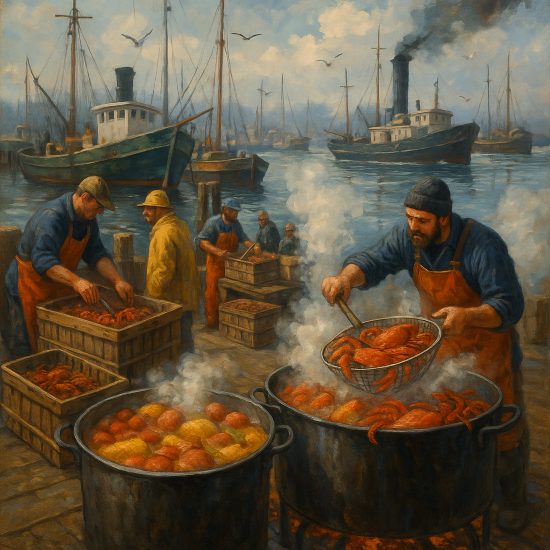
Lowcountry boils were born on the docks and coastal farms where shrimpers and workers fed entire crews using simple ingredients in one big pot.
🦀 New England Boils: Celebrating the Clam Bake Tradition
New England’s version of a seafood boil is closely tied to the iconic clam bake. Indigenous tribes originally steamed shellfish, seaweed, and vegetables in pits, influencing future coastal cooking traditions.
New England boils often include:
- Lobster
- Clams
- Mussels
- Potatoes
- Corn
- Butter-based seasoning
It’s a lighter, buttery, ocean-forward style that highlights fresh-caught seafood.
How Seafood Boils Became a National Favorite
By the late 20th century, seafood boils began spreading across the country thanks to:
- Families moving from coastal regions
- Seafood restaurants adopting the boil tradition
- Festivals highlighting regional foods
- Social media showcasing the dramatic “pour” style experience
Today, seafood boils are cherished nationwide because they offer something rare in dining: a hands-on, shared experience that brings people together.
Mr. Crab Seafood Boils: Continuing a Delicious Tradition
At Mr. Crab, we’re proud to honor this rich history with every boil we prepare. Our dishes blend classic seafood boil traditions with fresh ingredients and bold, customizable flavors.
Whether you’re a fan of spicy Cajun-style seafood, buttery New England flavors, or a flavor-packed custom boil, our kitchen brings the heritage of this classic coastal feast straight to your table.
Because seafood boils aren’t just food — they’re community, culture, and celebration.